
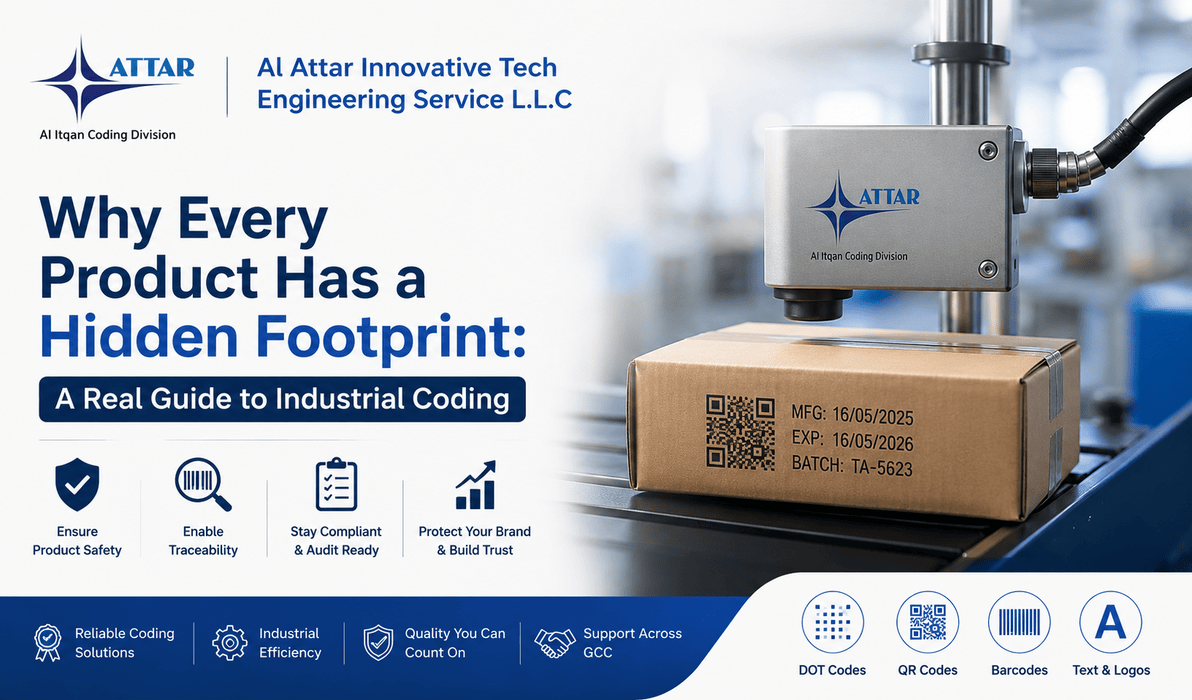
Take a look around your room right now. Grab a soda can, a bag of chips, or even the charger block for your phone. If you look closely, you’ll find a tiny string of text or a barcode stamped onto it. It might be an expiration date, a batch number, or a QR code.
Those little marks didn't get there by accident, and they definitely weren't stamped by hand. They are the work of industrial coding machines—the ultimate unsung heroes of the manufacturing world.
If you are running a factory line, these machines are just as critical as the raw materials themselves. Here is the lowdown on how they work and why they matter.
The Real Reason Factories Care About Coding
It’s easy to think of these codes as just "extra text" on a box, but in reality, they keep modern businesses alive.
- The Law Requires It: If you're in food, beverage, or pharma, you can't ship a single item without clear expiry dates. Skip this, and the regulators will shut you down.
- The "Uh-Oh" Insurance: If a bad batch of ingredients makes it into production, you don’t want to recall every product you’ve made this year. Clear coding lets you pinpoint and recall only the specific batch that went wrong, saving millions.
- Faking the Funk: Counterfeiting is a massive issue. Unique, high-res codes help brands prove their stuff is genuine.
Breaking Down the Tech
You can't just slap a standard desktop printer onto a conveyor belt moving at 60 miles per hour. Packaging comes in all shapes—wet aluminum cans, crinkly plastic bags, and rough cardboard boxes.
Because of that, factories use a few different tools for the job. You have Continuous Inkjet (CIJ) which basically sprays tiny ink droplets through the air onto curved surfaces, Thermal Inkjet (TIJ) for super crisp barcodes on flat boxes, and Lasers that literally etch the code directly into the material so it can never be rubbed off.
Picking the right one is all about matching the machine to your specific packaging material and production speed.
0 Comments
No comments yet. Be the first to share your thoughts!